Details
Year: 2014
Platform: iOS, Android, Apple Watch, Android Wear
Role: UX/UI Designer
Tools Used
Photoshop
Illustrator
Sketch
After Effects
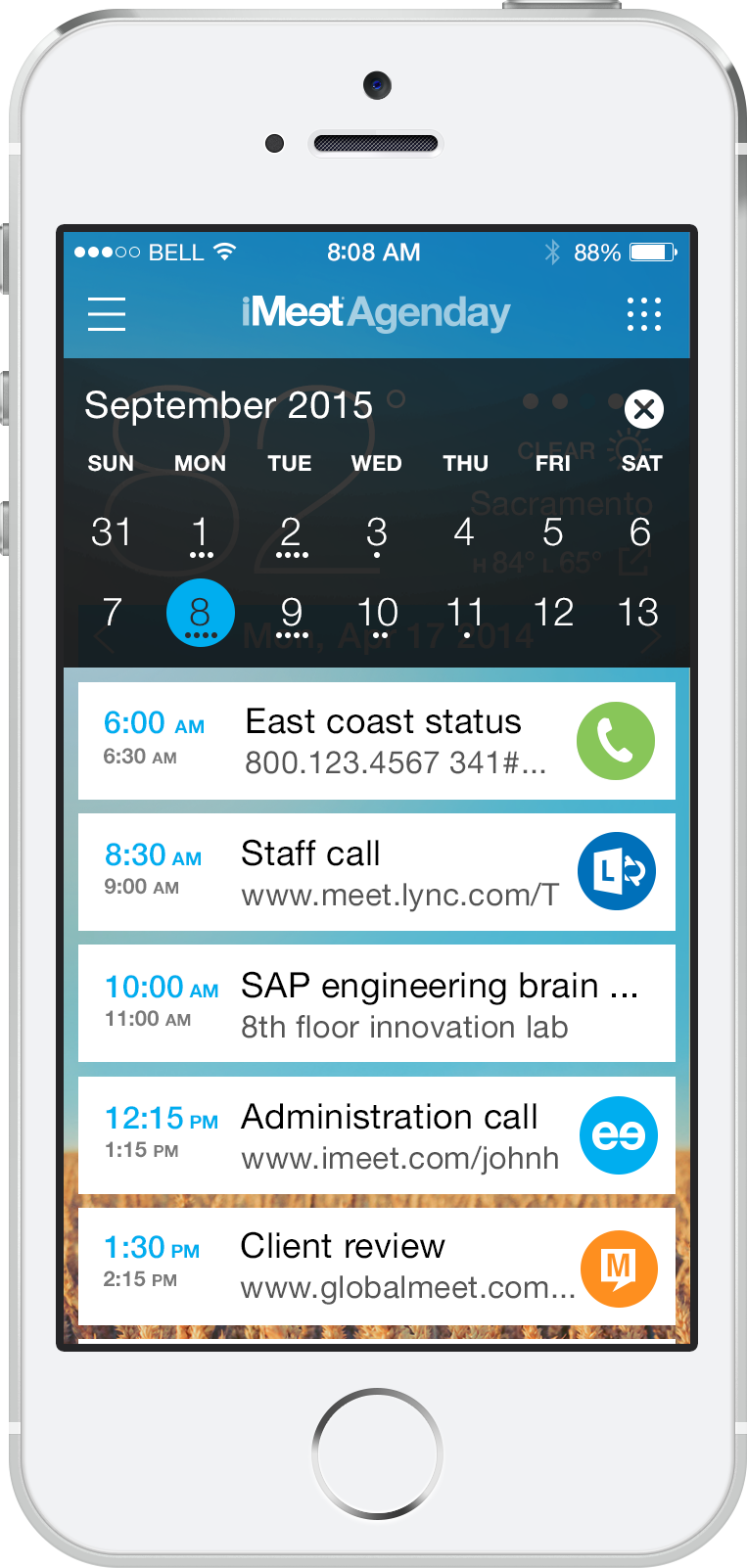
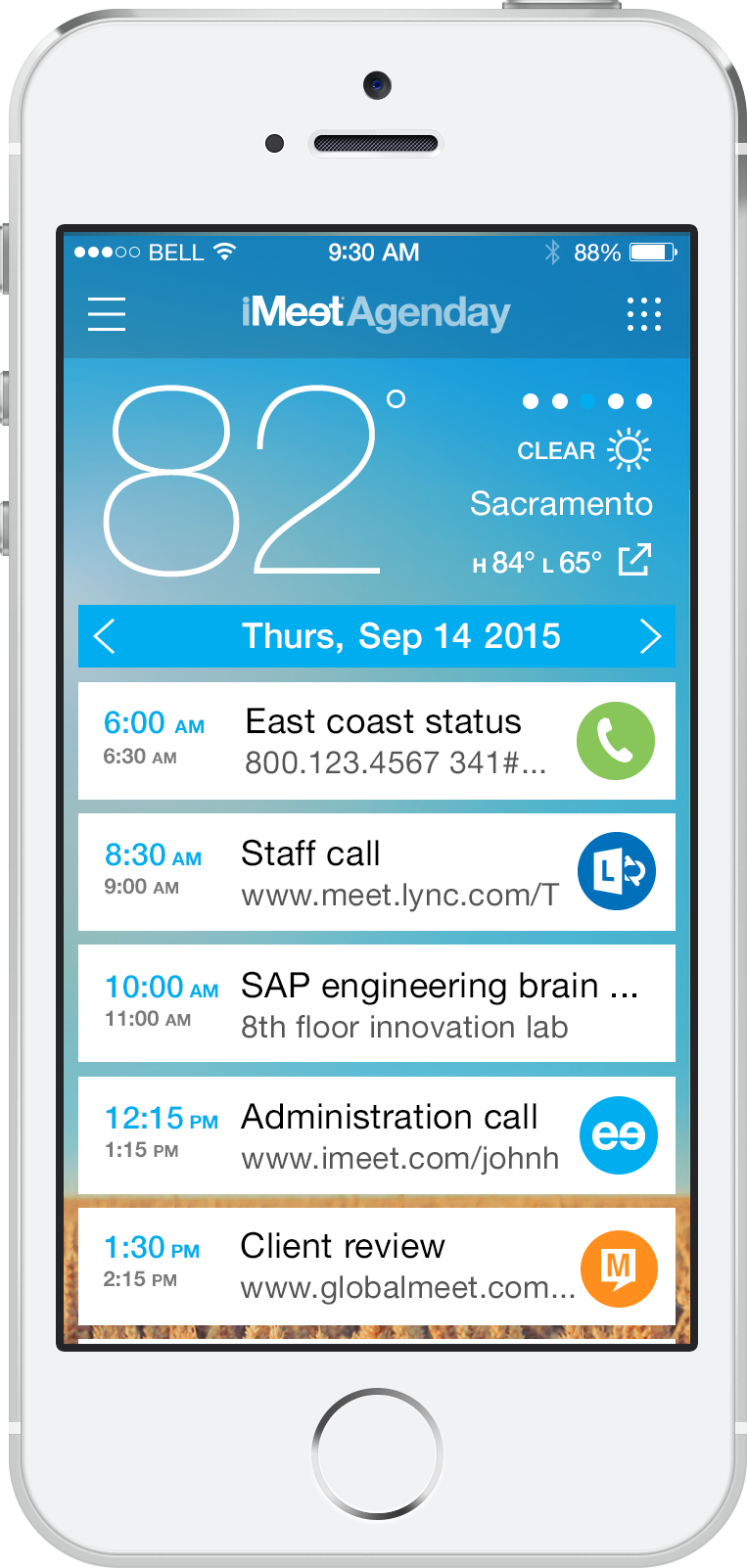
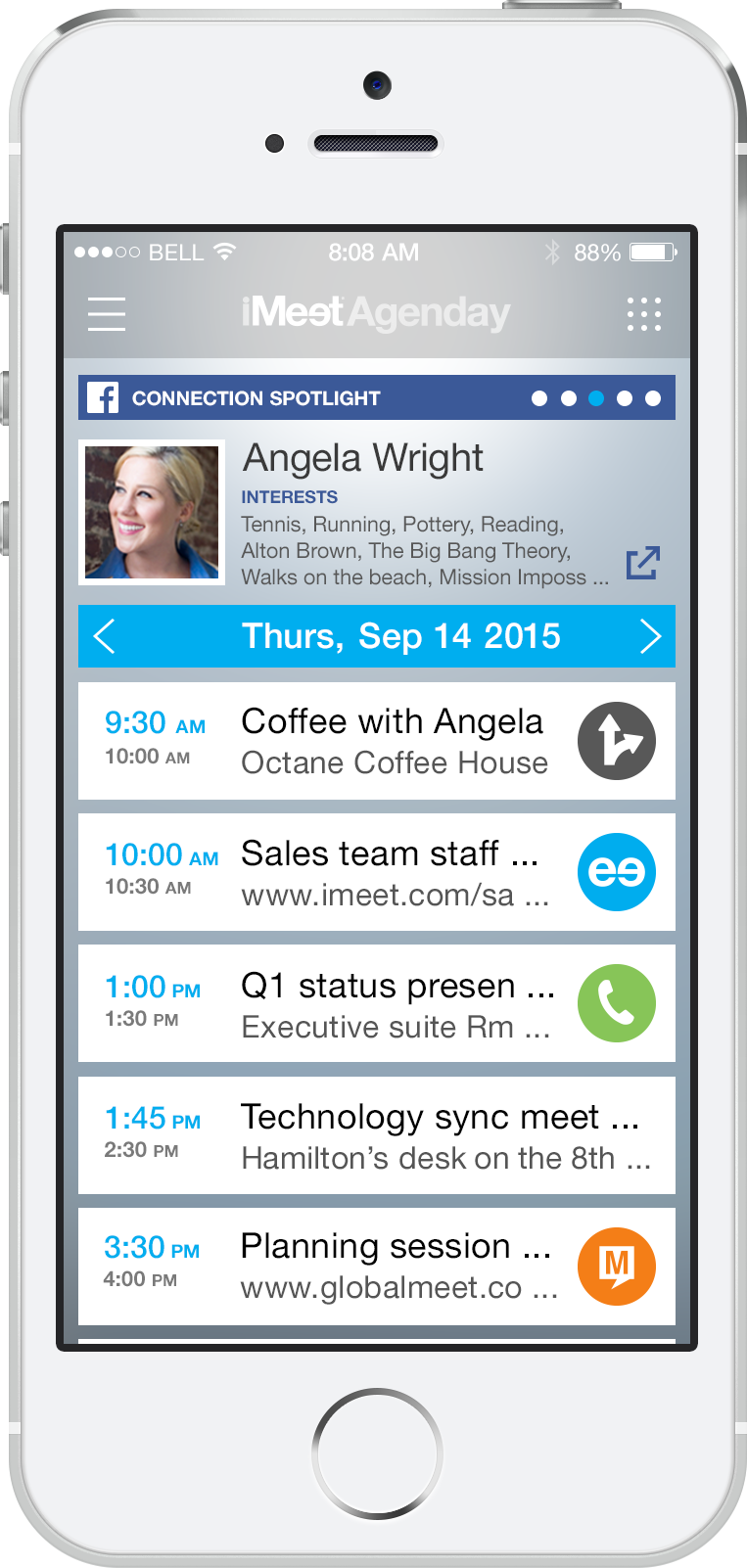
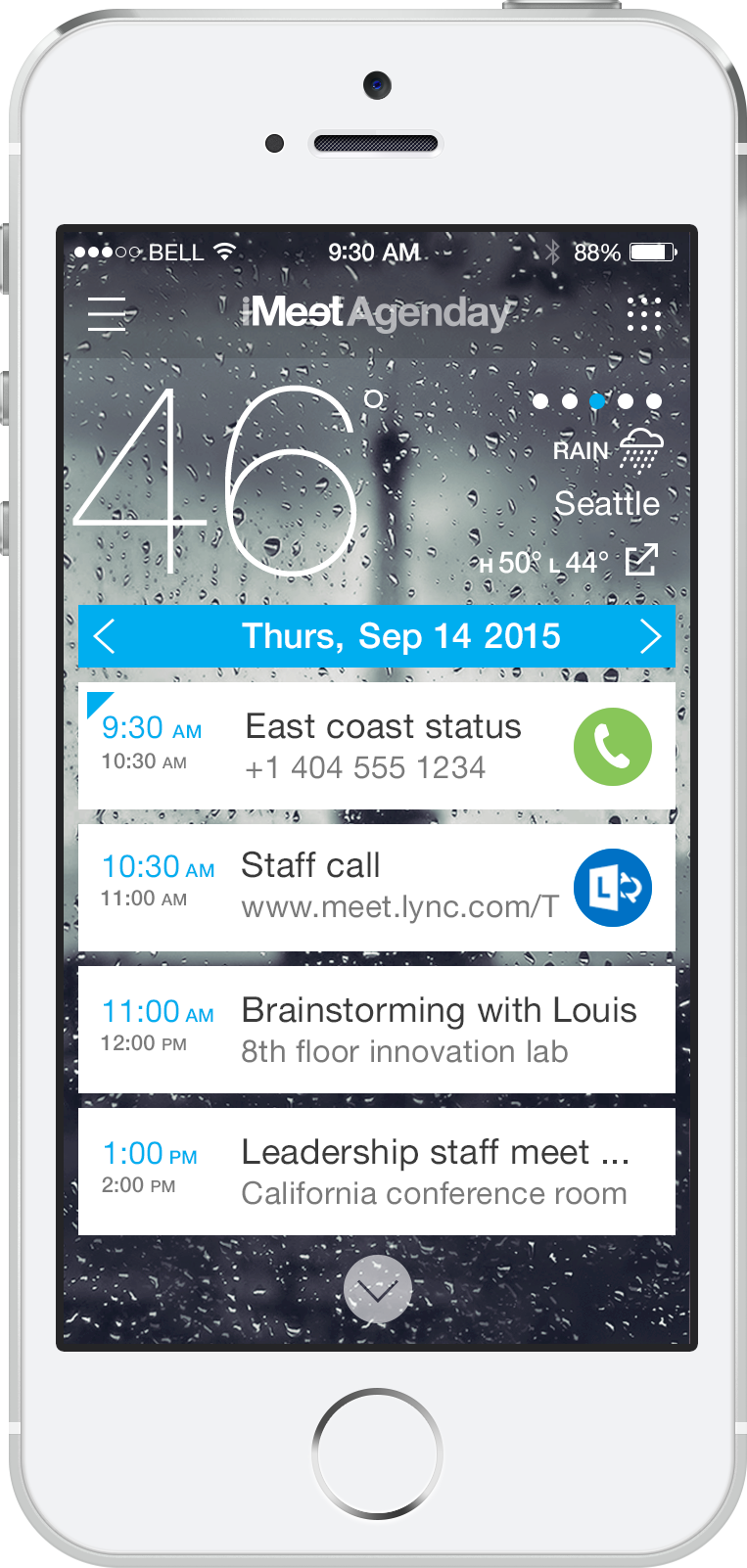
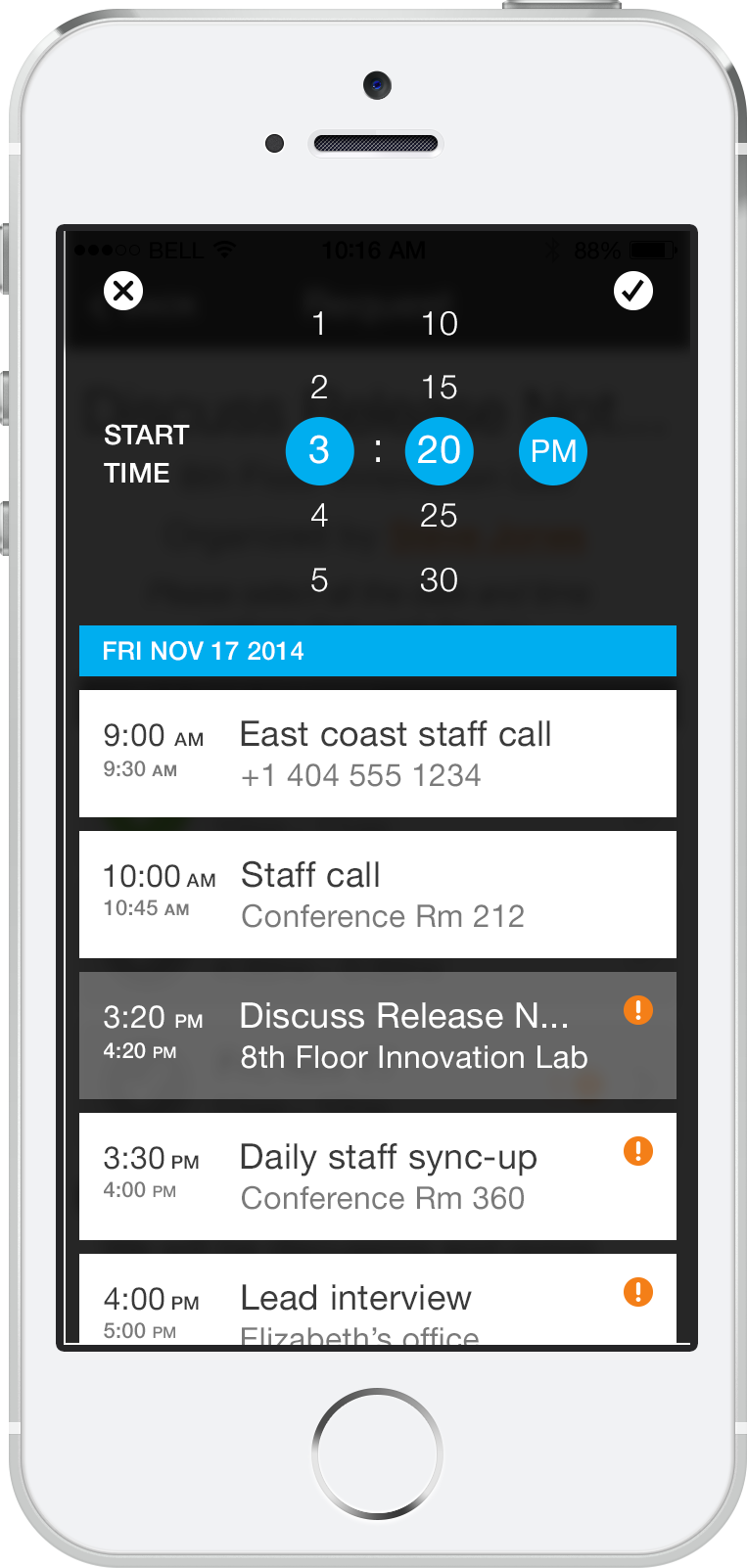
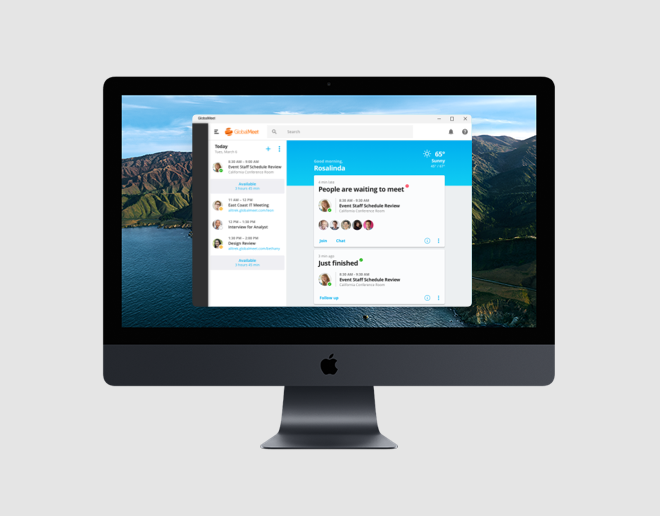
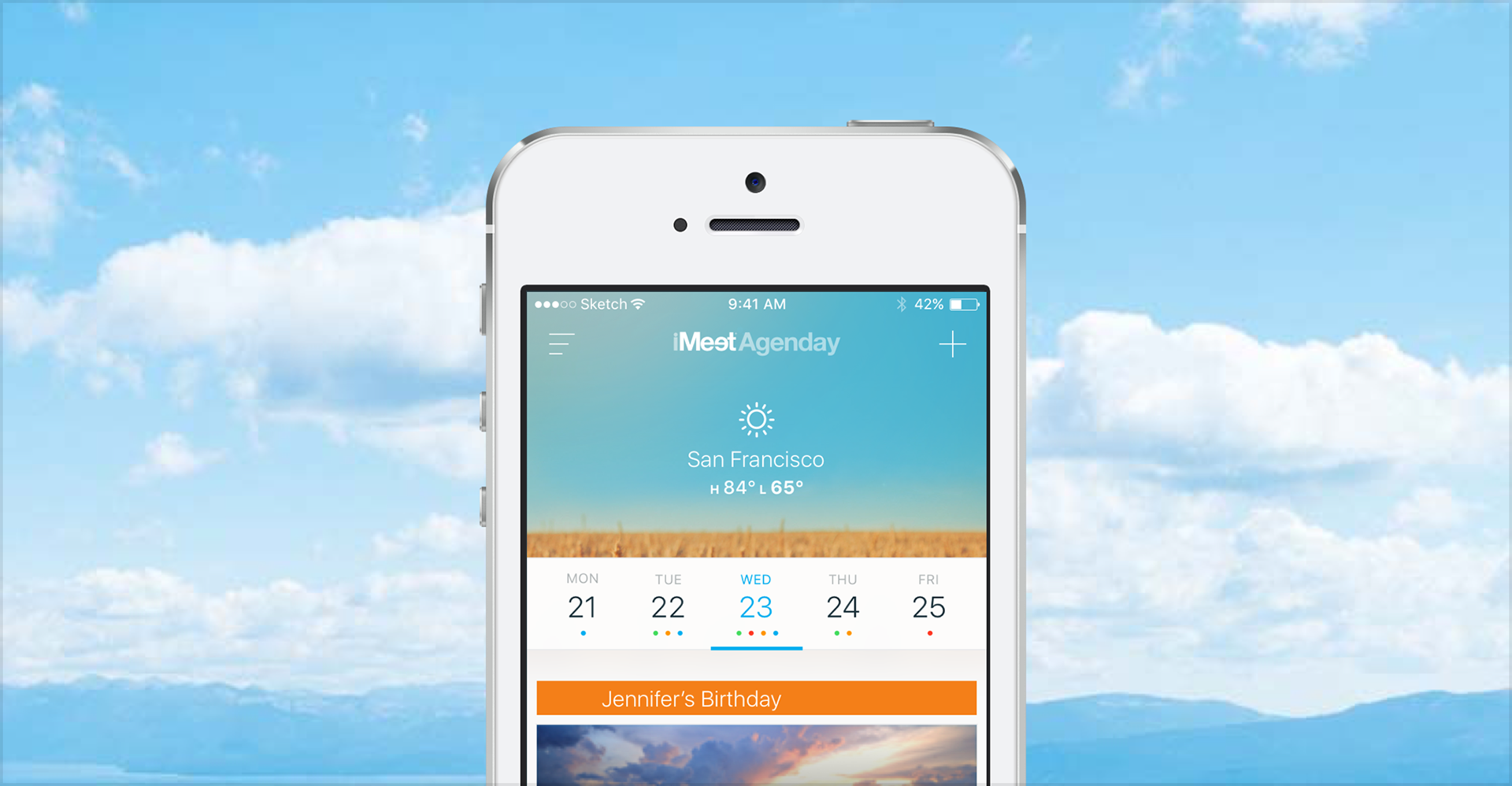
Agenday was a B2B personal assistant app built by PGi's internal Innovation Lab. It held a business traveler's calendar, the weather at wherever the day was headed, scheduling tools, and one-tap VoIP calling into a meeting, in a single app. I joined after the first release and stayed through the wearable versions.
PGi's Innovation Lab
Objective
An assistant app is judged on the steps it removes, not the features it holds. Agenday had already replaced the small run of taps between seeing a meeting and being in it. The question after launch was which other steps in a working day it could absorb.
That turned into three targets. Add the advanced scheduling and productivity features the calendar had been implying since launch. Get Agenday onto Apple Watch and Android Wear, since a calendar is the thing people check most and a phone is the slowest place to check it. And grow the active user base, which was the target PGi's CEO set.
Growth is an uncomfortable target for a designer, because design doesn't control pricing, marketing, or distribution. What it does control is whether the app is still worth opening in week three, so that's the version of the target I worked towards.
Approach & Methodology
Collected the constraints before the concepts
I worked with engineering and product early, on what was technically possible rather than on what was desirable. Calendar data, VoIP, and two wearable platforms each came with limits somebody already knew, and asking first meant those limits shaped the concepts instead of killing them later.
A concept that can't be built still costs the team a review cycle. It gets designed once, discussed, then designed again, and the schedule pays for both. So the cheapest place to find a constraint is before anyone has drawn the screen it breaks.
Used Sales as the shortest path to users
Agenday was B2B, which means the people using it sat inside accounts the sales team talked to every week. That's a faster channel to real usage than recruiting strangers who resemble the customer.
The filter is real, though. Sales hears from whoever is loudest in an account, and it over-reports the complaints that threaten a renewal. So I treated what came back as a map of where to look rather than as a list of what to build, then iterated the designs against the next round of feedback.
Let each platform behave like itself
Agenday had a look customers recognized, and that had to survive on both platforms. Identity travels. Convention doesn't, because people learn how controls work from the device in their hand, not from the app they happen to be in.
So the brand, the structure, and the vocabulary stayed constant, and navigation, gestures, and controls followed each platform's native patterns. An Android user handed an iOS navigation model has to learn a second way to do something they already knew how to do, and they'll read the difference as the app being wrong.
Designed the wearables for a glance, not for a smaller screen
A watch isn't a small phone. It's a few seconds of attention on a wrist attached to someone who is walking into a building, so the wearable versions couldn't be the app scaled down.
The wearable work carried the part of Agenday that answers a question in one look: what's next, and what to do about it. Anything that needed reading or typing stayed on the phone, because a wearable that makes a user scroll has already cost them more attention than pulling out the phone would have.
Agenday for Apple Watch
Impact & Results
Agenday shipped on Apple Watch and Android Wear, and the advanced scheduling and productivity features shipped into the phone apps, and the growth target the CEO set was met.
What Agenday taught me is that an assistant product spends its credibility on additions. Every feature adds a capability, but it also adds a decision, and an assistant that costs a user decisions isn't assisting. That test decided more of the scope than any preference of mine did.
It also set up what came next. I was named lead designer on iMeet Chat after this project.
Images