Details
Year: 2017
Platform: Web
Role: Lead Designer
Tools Used
Sketch
Abstract
Zeplin
InVision
Confluence
Trello
Notion
UserTesting.com
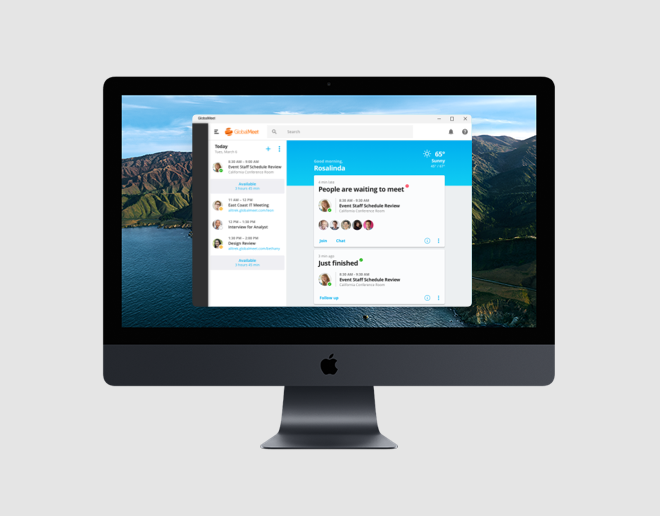
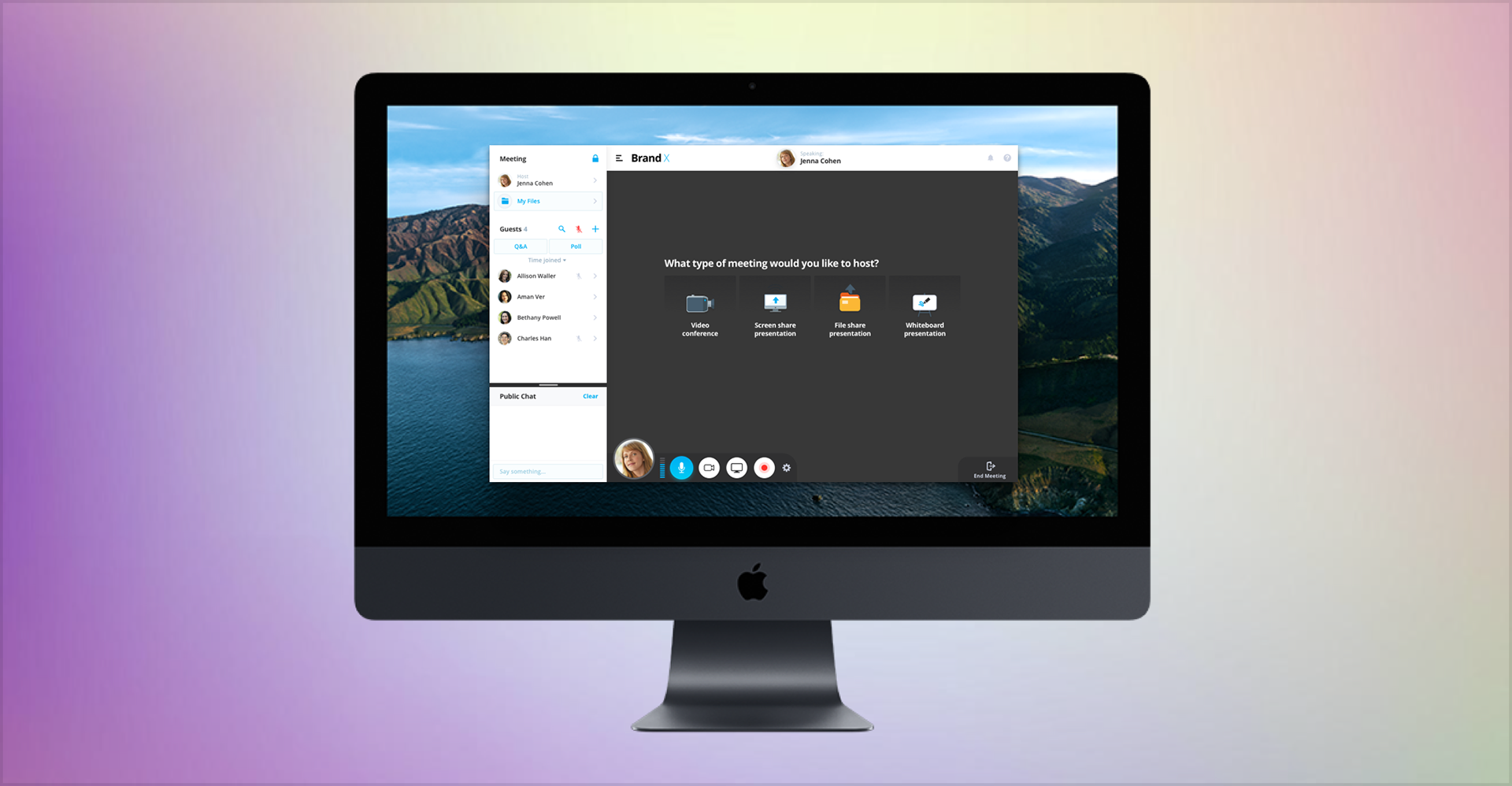
GlobalMeet was PGi's web conferencing product, sold to enterprises against Zoom and WebEx. The meeting room is the screen a customer actually lives in: joining, presenting, muting, sharing, managing who's in the call. The functionality was competitive. The interface was outdated and made navigation cumbersome and negatively impacted user efficiency.
Objective
An outdated interface doesn't fail loudly. It charges the user a few seconds at a time, on every meeting, in front of their colleagues. Someone hunting for the mute control while the room waits isn't evaluating our navigation. They're deciding the product is difficult.
That cost lands hardest at the exact moment a company is choosing a platform. A buyer compares GlobalMeet to Zoom in a trial, and a trial is short enough that first impressions decide it.
So the redesign had one job: modernize the meeting room without changing what it does. The feature set stayed, because customers had bought it and workflows depended on it. What changed was the structure, the density, and the vocabulary. Every major decision had to be validated with users rather than settled by seniority. A redesign argued from taste ships whatever the loudest person prefers.
Approach & Methodology
Found the friction before redesigning anything
I ran research on the interface we already had, with people who used it. Watching someone look for a control tells you where the structure is wrong. A redesign started from a blank canvas can only guess at that.
That's what set the scope. The work wasn't a fresh idea about conferencing. It was a list of places where the product made a person search for something it should have offered.
Kept the feature set and changed the interface
Modernizing is often used as cover for cutting features, and that trade is expensive here. An enterprise customer has trained employees on the product, so a removed control isn't a simplification to them, it's a support ticket.
Instead, I left the capabilities intact and reduced how much of the interface a user had to hold in their head at once. Simplification came out of hierarchy and spacing, not out of scope.
Prototyped in high fidelity, because the details were the problem
The work moved into high-fidelity prototypes early and iterated on user feedback. A wireframe can settle whether a panel exists. It can't tell you whether a person finds a control on a real screen, at real density, with everything else competing for attention.
Measured the decisions instead of arguing them
The major UI choices were settled with A/B testing rather than by preference. Design debates can run for weeks and still end on taste. Every week spent that way is a week the customer keeps the old screen.
Testing also changed who could veto. A stakeholder can override a designer's judgment. It's much harder to override a task success rate, so the tests protected decisions that were right for reasons other than authority.
Worked the build alongside the people shipping it
I worked with developers, product managers, and stakeholders through the whole redesign rather than handing off at the end. Constraints found late get resolved by whoever is closest to the deadline. That's usually the wrong person to make a design decision.
Impact & Results
Task success on the core meeting flows went from 61% to 94% in usability testing. That's a usability measure, not a revenue figure. Nobody at PGi measured what the redesign did to sales or retention while I was there.
Users recognized it as the same product, which was the point of leaving the feature set alone.
“I like that it is more simplified, clean, not as boxy as GlobalMeet. It looks newer even though it has the same feature sets. More simplified. Very Apple-like.”
~ 3-year GlobalMeet user
The redesign also exposed the larger problem. GlobalMeet was now current and the rest of PGi's suite wasn't. Nothing in place kept the products from drifting apart again. That's what led directly to DIG, PGi's first design system, which I built the following year.